Does Your Child Breathe Through Their Mouth?
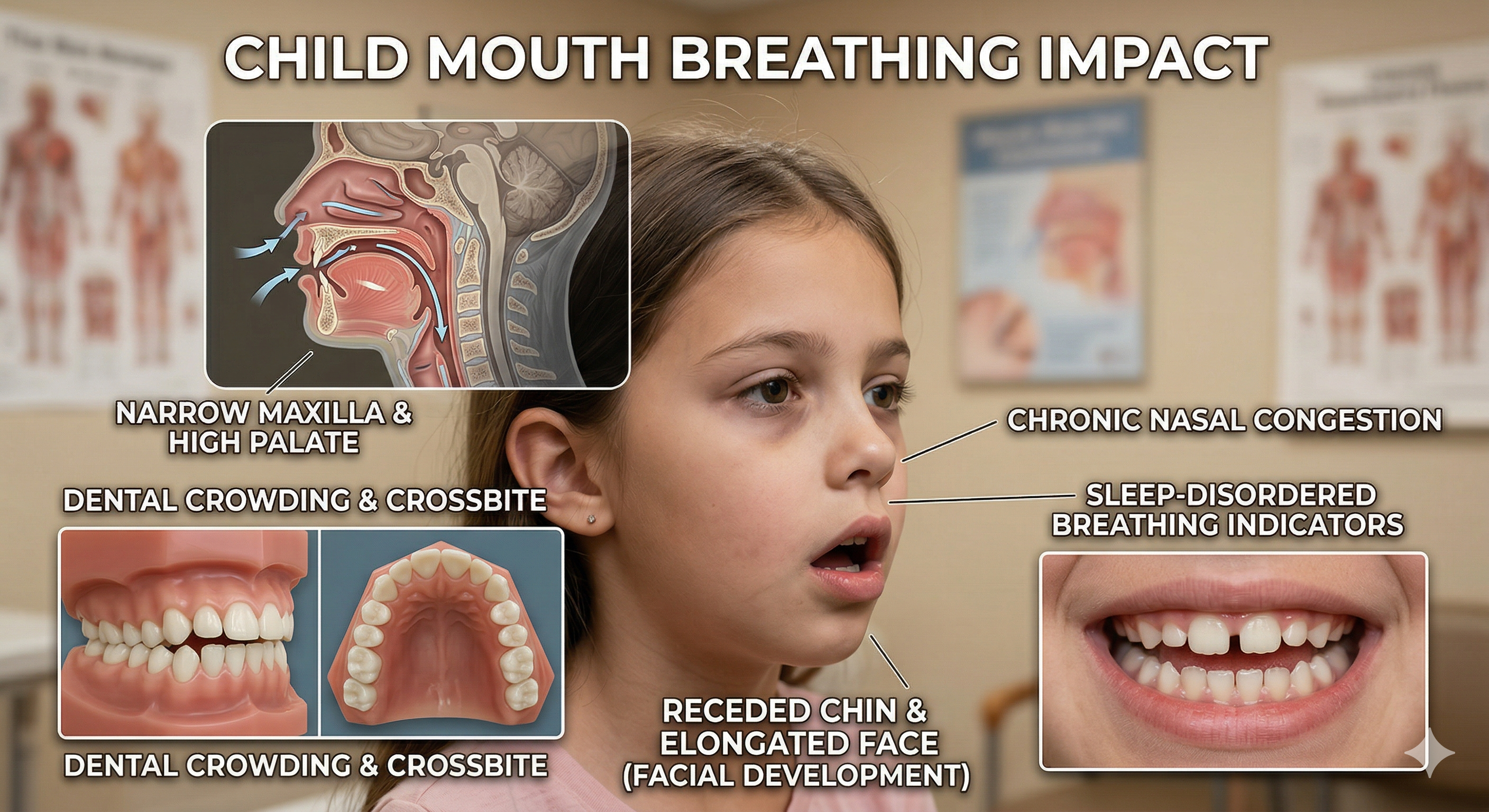
Many parents view mouth breathing as a harmless habit, but in the field of dentistry, it is often a "red flag" for a child's development. Chronic mouth breathing can significantly impact how a child’s face, jaw, and teeth grow.
What is "Adenoid Face"?
When children breathe primarily through their mouth, the muscles in their face and tongue rest in abnormal positions. Over time, this can lead to a long, narrow face, recessed chin, and crowded teeth—a look often referred to as "Adenoid Face."
Why is it Happening?
Typically, children breathe through their mouth because their nasal airway is obstructed. This could be due to allergies, enlarged tonsils, or a deviated septum. When the nose is blocked, the body compensates by using the mouth.
Signs Your Child is a Mouth Breather:
- Snoring or heavy breathing during sleep.
- Open mouth posture even when awake or watching TV.
- Chronic bad breath or dry, cracked lips.
- Daytime fatigue or difficulty concentrating in school.
How Dear Dental Can Help
Early intervention is key. At Dear Dental Clinic, we assess your child's jaw development and airway. We work closely with specialists to help transition your child back to healthy nasal breathing, ensuring their facial growth stays on the right track.
Back to Knowledge Base